ID : Sosialisasi PLP 2026 Tingkat Program Studi Pendidikan Teknik Informatika dan Komputer FKIP UNS
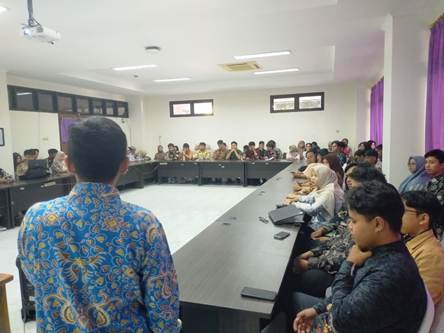
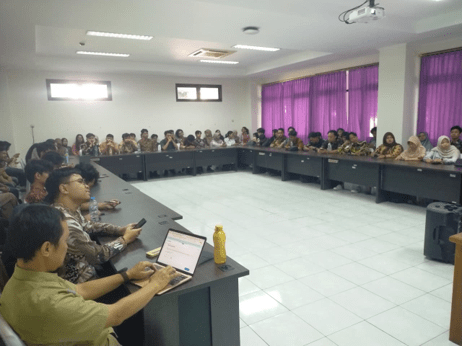
As part of its efforts to prepare students for the School Field Introduction Program (Program Pengenalan Lapangan Persekolahan/PLP) 2026, the Informatics and Computer Engineering Education (PTIK) Study Program, Faculty of Teacher Training and Education (FKIP), Universitas Sebelas Maret (UNS), held the 2026 PLP Orientation Program on Friday, August 28, 2026, starting at 1:00 p.m. Western Indonesia Time (WIB). This activity served as an important part of preparing students before they directly engage in educational settings.
The study program-level PLP orientation was conducted to provide students with an understanding of the mechanisms, stages, regulations, and various activities that they would undertake throughout the PLP program. Through this activity, students gained an overview of the roles and responsibilities they would assume as prospective educators while carrying out their activities in schools.
The orientation featured guidance from the Head of the Informatics and Computer Engineering Education Study Program, as well as a presentation by Dr. Dwi Maryono, S.Si., M.Kom., a lecturer in the PTIK Study Program, FKIP UNS. The involvement of speakers from the study program was expected to provide students with a more comprehensive understanding of PLP implementation, particularly in preparing themselves for teaching practice in schools.
In his guidance, the Head of the Informatics and Computer Engineering Education Study Program emphasized that during the PLP period, students were expected to actively participate in various school activities. PLP is not only an opportunity for students to apply the knowledge and skills they have acquired during their studies, but also a space for them to directly understand the dynamics of school life and the learning process.
“During the PLP period, students are expected to participate in school activities and become involved in various educational activities. It is hoped that the PLP program will provide students with comprehensive experience to prepare themselves for entering the field of education in a real-world setting.”
Meanwhile, Dr. Dwi Maryono, S.Si., M.Kom. provided guidance on important aspects that students need to consider while undertaking PLP. Students were encouraged to prepare thoroughly, understand their duties and responsibilities while at school, and maintain a professional attitude as prospective educators.
During the implementation of PLP at schools, students will participate in several core activities, including classroom learning observation, development of teaching materials, supervised teaching practice, and a teaching practice examination. Throughout these activities, students will practice developing various instructional materials, such as Teaching Modules (Modul Ajar), Student Worksheets (Lembar Kerja Peserta Didik/LKPD), and learning media, tailored to learning objectives, student characteristics, and the conditions of the schools where the PLP is conducted.
The learning observation stage is one of the important initial stages that enables students to become familiar with the school environment, student characteristics, learning processes, and teaching strategies implemented by teachers. The results of these observations will subsequently serve as a foundation for students in preparing instructional materials and conducting learning activities.
During the supervised teaching practice stage, students will begin gaining experience in designing and implementing lessons under the guidance of supervising teachers. Subsequently, through the teaching practice examination, students will be required to demonstrate their ability to manage learning activities more independently and professionally.
In addition to conducting teaching practice, students are also expected to develop effective communication skills, adapt to the school environment, and understand various challenges that may arise during the learning process. These experiences play an important role in developing students’ competencies in the pedagogical, professional, social, and personal domains as prospective educators.
PLP also provides an opportunity for PTIK students to connect the competencies they have acquired during their studies with the needs of learning in schools. As prospective educators in the field of informatics and computer education, students are expected to deliver learning experiences that are relevant to technological developments and to utilize various technological media and devices to support the learning process.
Through this orientation, students of the Informatics and Computer Engineering Education Study Program, FKIP UNS, are expected to be better prepared before undertaking PLP in educational institutions. Students are expected to be able to fulfill their responsibilities as prospective educators professionally, design and implement learning activities independently, and develop the ability to address various real-world classroom situations and challenges.
With the knowledge and preparation gained through the orientation and the implementation of PLP, students are expected not only to acquire practical teaching experience but also to develop a more comprehensive understanding of the field of education. These experiences can serve as valuable preparation as they enter the teaching profession in the future.